
AI Futures Project Publishes “AI 2040: Plan A” as a Slower Path to Superintelligence
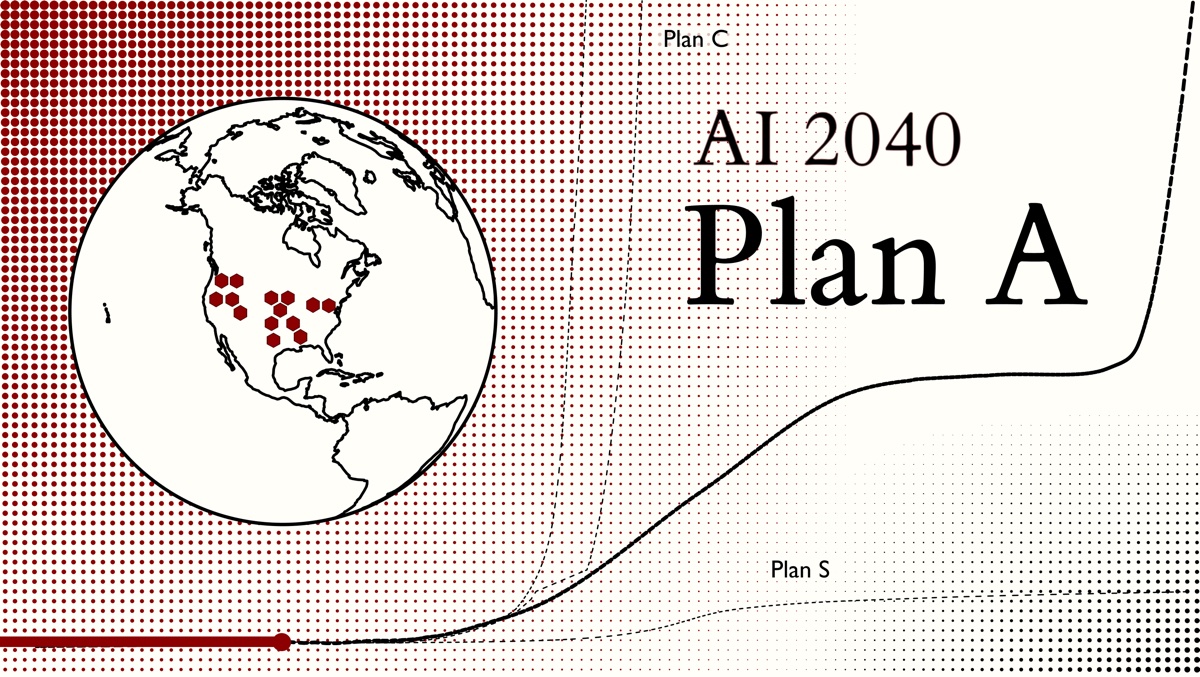
AI Futures Project has published “AI 2040: Plan A,” a recommendation-focused scenario arguing that decisive U.S.-China coordination could delay superintelligence until 2040, make advanced AI research more public, broaden participation in frontier development, and reduce the risk of a destabilizing race.
AI Futures Project has published “AI 2040: Plan A,” a recommendation-focused scenario that argues governments could delay superintelligence until 2040 through a U.S.-China agreement and related international controls.
A proposed alternative to a faster AI race
In the AI Futures Project blog post “AI 2040: Plan A,” the organization describes the scenario as a “recommendation-focused” path for avoiding a rapid and unstable race to superintelligence. The accompanying canonical scenario site says the plan would delay superintelligence until 2040, make AI research more public, broaden participation in frontier AI development, and rely on “mutually assured compute destruction” as part of an enforcement framework.
The proposal follows earlier attention around AI Futures Project’s “AI 2027” work. The Washington Post reports that Daniel Kokotajlo’s AI Futures Project published “AI 2040: Plan A” as a proposed international deal intended to delay smarter-than-human AI until 2040. Kokotajlo is described by The Washington Post as an ex-OpenAI employee associated with the earlier “AI 2027” prediction effort.
What the scenario recommends
According to AI Futures Project’s scenario materials, the core premise is that the United States and China would take decisive action to slow the development of superintelligent AI rather than competing to reach it as quickly as possible. The canonical “AI 2040” site says the plan would shift AI research into a more public mode and broaden the set of actors involved in frontier AI work.
The same scenario describes “mutually assured compute destruction” as one mechanism for reducing incentives to secretly build prohibited systems. In broad terms, that phrase refers to an enforcement concept centered on compute infrastructure: if one side attempted to defect from an agreement, the other side would have a way to respond against the computing capacity needed to train or run advanced systems. AI Futures Project presents this as part of a larger governance package, not as a standalone technical fix.
The organization frames the plan as a way to gain time. Rather than treating near-term superintelligence as inevitable, the scenario argues that policy choices could slow the timeline and create more room for public oversight, technical safety work, and international coordination.
Advocacy and the AI safety ecosystem
The public discussion around “AI 2040: Plan A” also intersects with debates inside the AI safety community about whether to prioritize research, policy, or advocacy. In an interview on The Cognitive Revolution, Ryan Kidd of MATS discussed the AI safety research community and said MATS limits its advocacy role while identifying advocacy-oriented organizations in the broader ecosystem, including Encode and CASE.
That distinction matters because “AI 2040: Plan A” is not merely a technical research agenda. It is a policy scenario that depends on political will, institutional capacity, and public-facing arguments for slowing advanced AI development. AI Futures Project’s own description emphasizes government action and international coordination, while The Cognitive Revolution interview illustrates that different organizations in the AI safety field see different roles for research training and advocacy.
Why it matters
The publication of “AI 2040: Plan A” adds a concrete governance proposal to an increasingly active debate about how societies should respond to the possibility of AI systems exceeding human capabilities. AI Futures Project’s materials argue for deliberate delay, transparency, and broader participation. The Washington Post’s coverage places the proposal in the context of Kokotajlo’s previous high-profile forecasting work.
The scenario is best understood as a policy argument rather than a forecast that such an agreement will occur. Its central claim is conditional: if major powers, especially the United States and China, choose coordinated restraint, AI Futures Project argues that superintelligence could be delayed and governed under more transparent conditions. Whether governments would accept such constraints, and whether verification could work in practice, remain open questions.
- 1
AI Futures Project has published “AI 2040: Plan A,” a recommendation focused scenario that argues governments could delay superintelligence until 2040 through a U.S.
- 2
The proposal follows earlier attention around AI Futures Project’s “AI 2027” work.
- 3
The Washington Post reports that Daniel Kokotajlo’s AI Futures Project published “AI 2040: Plan A” as a proposed international deal intended to delay smarter than human AI until 2040.
Continue reading