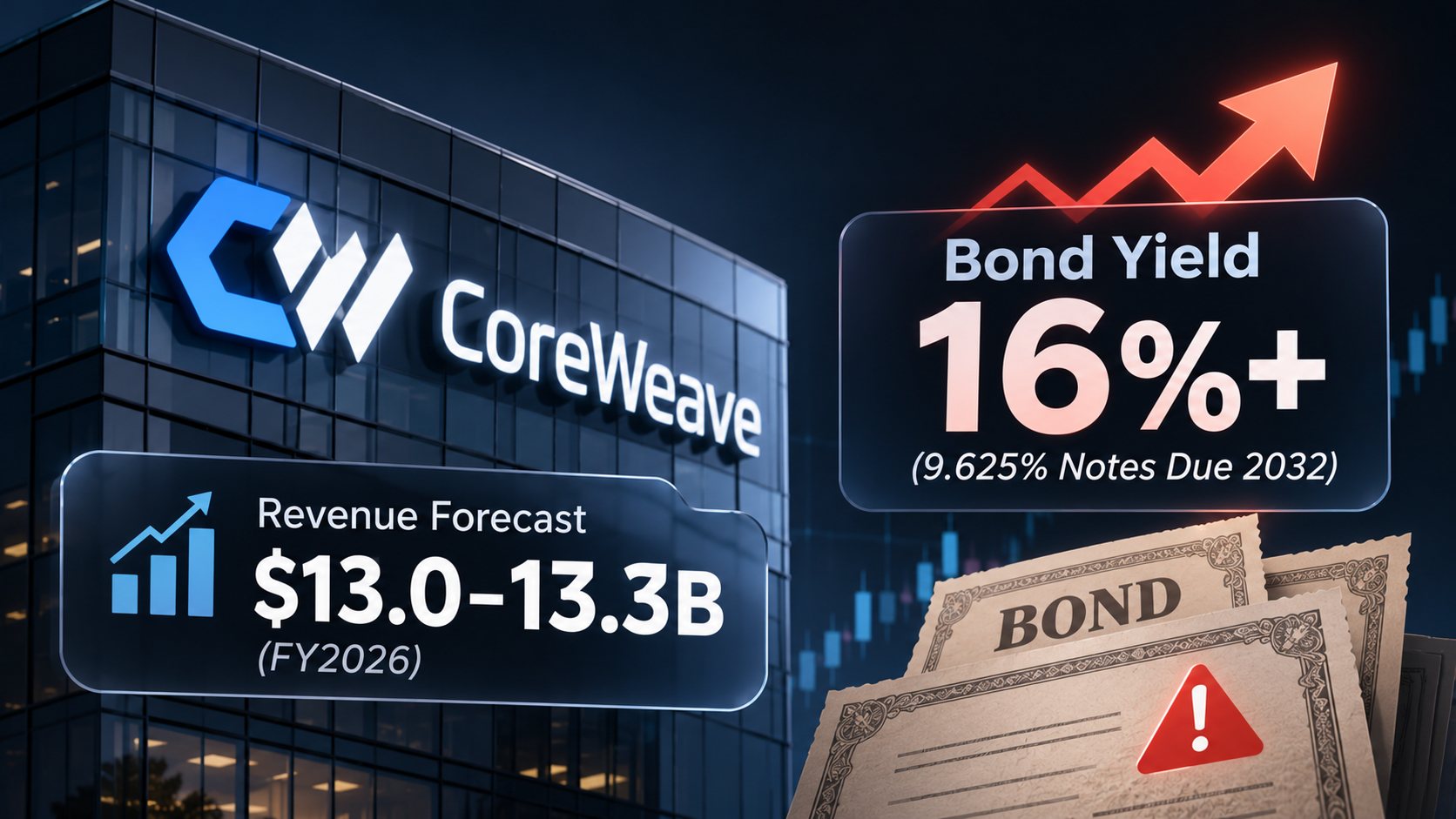

CoreWeave raised its full-year 2026 revenue guidance to $13.0 billion to $13.3 billion after reporting third-quarter results. In the same period, the yield on its 9.625% notes due 2032 rose above 16%, according to CNBC. Reuters and the Associated Press reported that the results and higher forecast lifted AI-cloud stocks, and Reuters also reported gains for Nvidia shares. The two numbers point in different directions. One says CoreWeave expects more demand for AI computing capacity. The other says credit investors were pricing substantial risk into its debt.
Each number supports less than it might seem to. The guidance shows CoreWeave expects higher sales. It doesn't show profitability, free cash flow or the cost of supplying that demand. CNBC characterized the yield above 16% as a sign of concern over debt-funded AI infrastructure expansion. A high yield on existing long-dated notes doesn't show CoreWeave can't obtain financing, but it does show investors demanded a high return to hold that debt when CNBC reported it.
The company points to customer money as part of the answer. According to the AP, CoreWeave expects roughly $9 billion in customer prepayments and deposits to help meet its obligations. That could support its financing needs if the money arrives on the expected terms. The reporting doesn't give payment timing, contractual conditions or collection risk, or compare the amount with future infrastructure spending and interest costs. Reuters reported that CoreWeave decided not to issue unsecured debt at prevailing yields. That eased an immediate concern, but it means only that the company didn't lock in those terms. It doesn't show that cheaper funding exists or that no more financing will be needed.
So the evidence supports two conclusions at once: CoreWeave's sales outlook improved, and credit investors stayed cautious about the funding model behind its expansion. Three questions remain open. Do the expected customer payments arrive as planned? Can the capacity be financed at an acceptable cost? Does rising revenue improve the cash economics of the buildout? This is a description of reported figures, not investment advice.
