
OpenHands Patches Docker Security Flaw That Could Put Developer Secrets at Risk
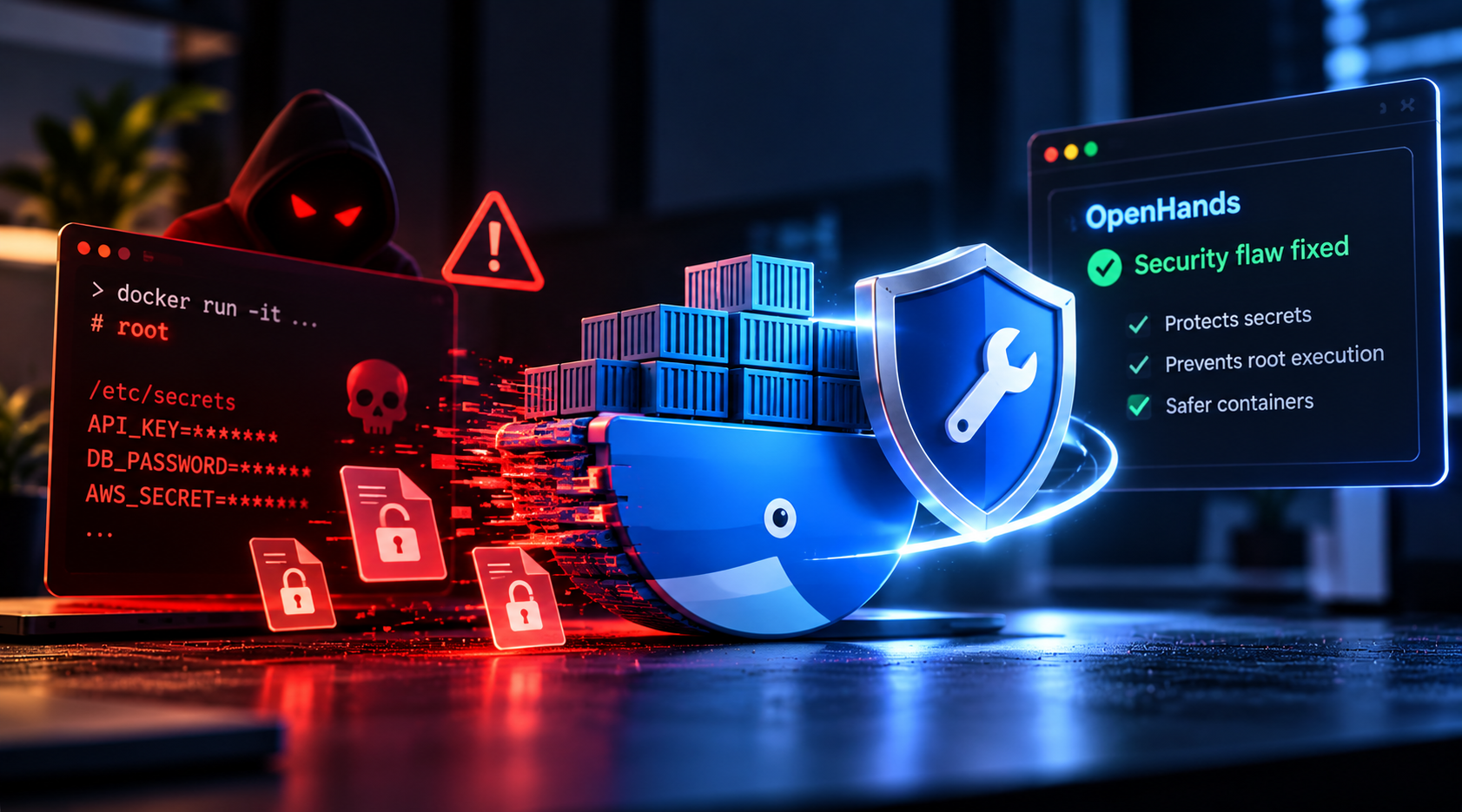
OpenHands has released Software Agent SDK version 1.52.0 to fix a serious Docker security vulnerability that could allow unauthenticated attackers to execute shell commands as root inside affected sandboxes. The flaw, tracked as CVE-2026-112346, could also expose mounted workspaces and plaintext secrets accessible within those environments.
According to the GitHub security advisory, the vulnerability affected versions before 1.52.0 when Docker-backed workspace ports were reachable by an attacker. The issue highlights a significant security risk for AI coding agents and developer tools that operate with access to source code, project files, and credentials.
How the OpenHands Docker Vulnerability Worked
The security issue stemmed from how OpenHands published ports for its DockerWorkspace implementation. According to OpenHands' security fix, the workspace API port and optional VS Code port were previously published on all host network interfaces.
When those ports were reachable, the exposed HTTP and WebSocket services could accept unauthenticated requests capable of executing shell commands as root inside the sandbox.
That access could put sensitive development data at risk, including mounted code repositories, project files, generated artifacts, and plaintext credentials available within the workspace.
However, root access inside a Docker container does not automatically mean an attacker can gain root access to the host machine. The published advisory does not establish that host systems were compromised.
OpenHands SDK 1.52.0 Fixes the Risky Port Configuration
OpenHands addressed the vulnerability by changing how Docker-backed workspace ports are published. Instead of exposing the relevant ports across all host interfaces, the updated implementation binds them to the loopback interface.
In practical terms, loopback binding restricts access to the host itself by default, reducing the risk of requests arriving through external network interfaces.
The fix is included in OpenHands Software Agent SDK v1.52.0. The GitHub advisory identifies earlier versions as affected.
The correction addresses the underlying port-publication behavior rather than relying solely on users to configure network firewalls correctly. However, custom networking and independently configured deployments may still require separate security reviews.
Could the OpenHands Flaw Have Exposed Source Code and Credentials?
Potentially, yes. The GitHub advisory states that an attacker who could reach the vulnerable services might execute commands inside the sandbox and access mounted workspaces and plaintext secrets available there.
For developers and organizations using AI-powered coding environments, this creates a significant concern. These environments may contain proprietary source code, API keys, access tokens, and other sensitive development data.
The actual impact would depend on what was mounted into the affected workspace and whether the vulnerable ports were reachable by an untrusted party.
Neither the advisory nor the release notes establish that every installation was exposed to the public internet. They also do not confirm active exploitation, compromised users, or a specific data breach.
What Developers Should Do to Secure OpenHands
Teams running OpenHands Software Agent SDK with Docker-backed workspaces should take the following steps:
Upgrade immediately: Move to version 1.52.0 or later to obtain the loopback port-binding fix.
Review network exposure: Check whether workspace API or optional VS Code ports were accessible through interfaces reachable by untrusted networks.
Investigate potential access: Review available network and application logs for suspicious requests to previously exposed services.
Audit mounted secrets: Identify credentials, tokens, repositories, and sensitive files that were available to affected workspaces.
Rotate potentially exposed credentials: If unauthorized access is suspected or cannot be reasonably ruled out, rotate affected secrets and review their usage.
Check custom configurations: Verify that reverse proxies, port forwarding, container settings, or other infrastructure do not re-expose services intended to remain local.
Updating the SDK corrects the vulnerable default behavior, but it cannot establish whether a previously exposed service was accessed.
CVE-2026-112346 Highlights Security Risks in AI Coding Tools
The OpenHands vulnerability underscores a broader challenge for AI coding agents and automated software development environments: sandboxing alone does not guarantee security.
These tools often need access to source code, terminals, development services, and credentials to complete tasks. If an unauthenticated service becomes reachable beyond its intended boundary, that access can put everything available inside the environment at risk.
The key lesson is that network exposure, authentication, container isolation, and secret management must work together. OpenHands' loopback-binding fix addresses an important security boundary, while operators remain responsible for checking their deployment configurations and investigating any potential prior exposure.
For teams using OpenHands, upgrading to version 1.52.0 or later and reviewing previous network exposure are the most important immediate steps.