What it does
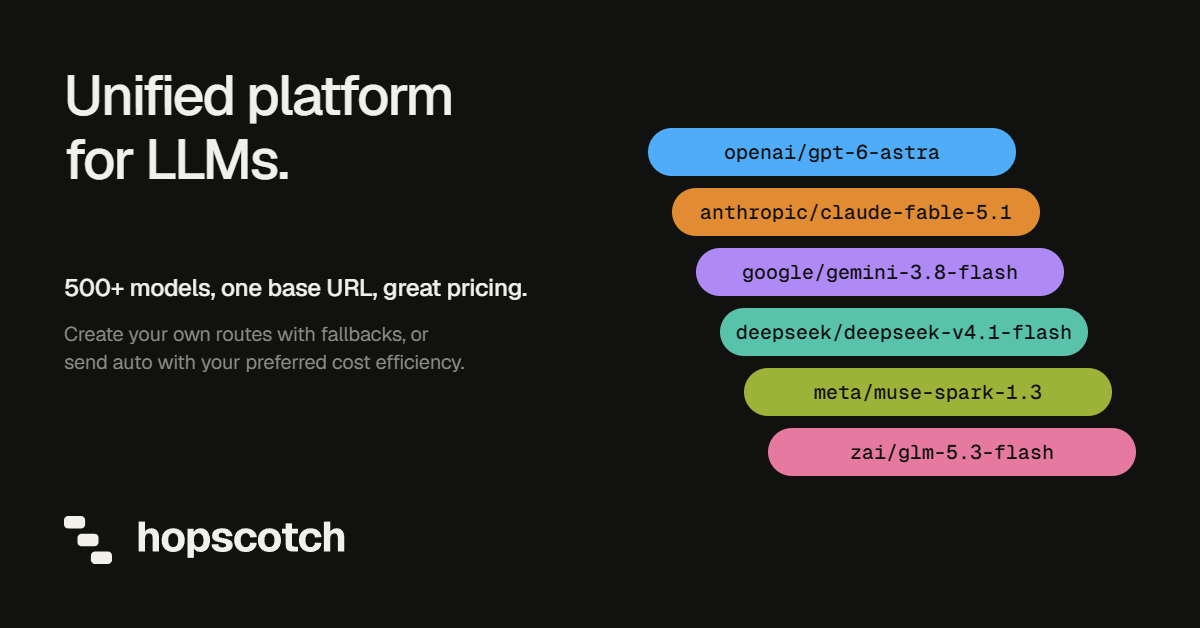
Hopscotch is an LLM gateway. You set a new base URL and API key in the OpenAI SDK you already use. After that, you switch models by changing the model name. Model names start with the provider, such as anthropic/claude-sonnet-5. To start, you create an account, add credit and issue a key to send your first request. Hopscotch runs the model you ask for. Hopscotch says your prompts reach the model as you wrote them and the answers come back unchanged. Some features that providers run on their own servers, such as web search, audio and hosted tools, are not supported through Hopscotch's provider accounts. When a provider has an outage, Hopscotch retries your request first. If you use a routing profile, it then moves to the next model on your list. For chat requests, a final attempt runs your model through a backup provider. If every attempt fails, you get an error.
Capabilities
- Spend limits can be set for each API key, each teammate and the whole workspace. Requests over a limit are refused, and refused requests cost nothing. Account spending is also capped per minute, at $50 by default. An owner can pause all spending at once.
- Every response and error carries a request ID. You can look up that ID to see which provider served the request, what it cost and how it ended.
- You can add your own provider key, such as an OpenAI key. Hopscotch then sends that provider's requests on your key. The provider bills you directly. If your key fails, Hopscotch does not switch to its own key.
- The playground runs one prompt on up to three models side by side. You can compare the answers, speed and cost.
- Usage analytics show what you spend, how fast requests come back and how often they fail.
When to use it
- When an agent runs in a loop and you need it to stop at a spending limit.
- When a provider goes down and you want requests to move to another model.
- When you want to compare one prompt across up to three models before you pick one.
