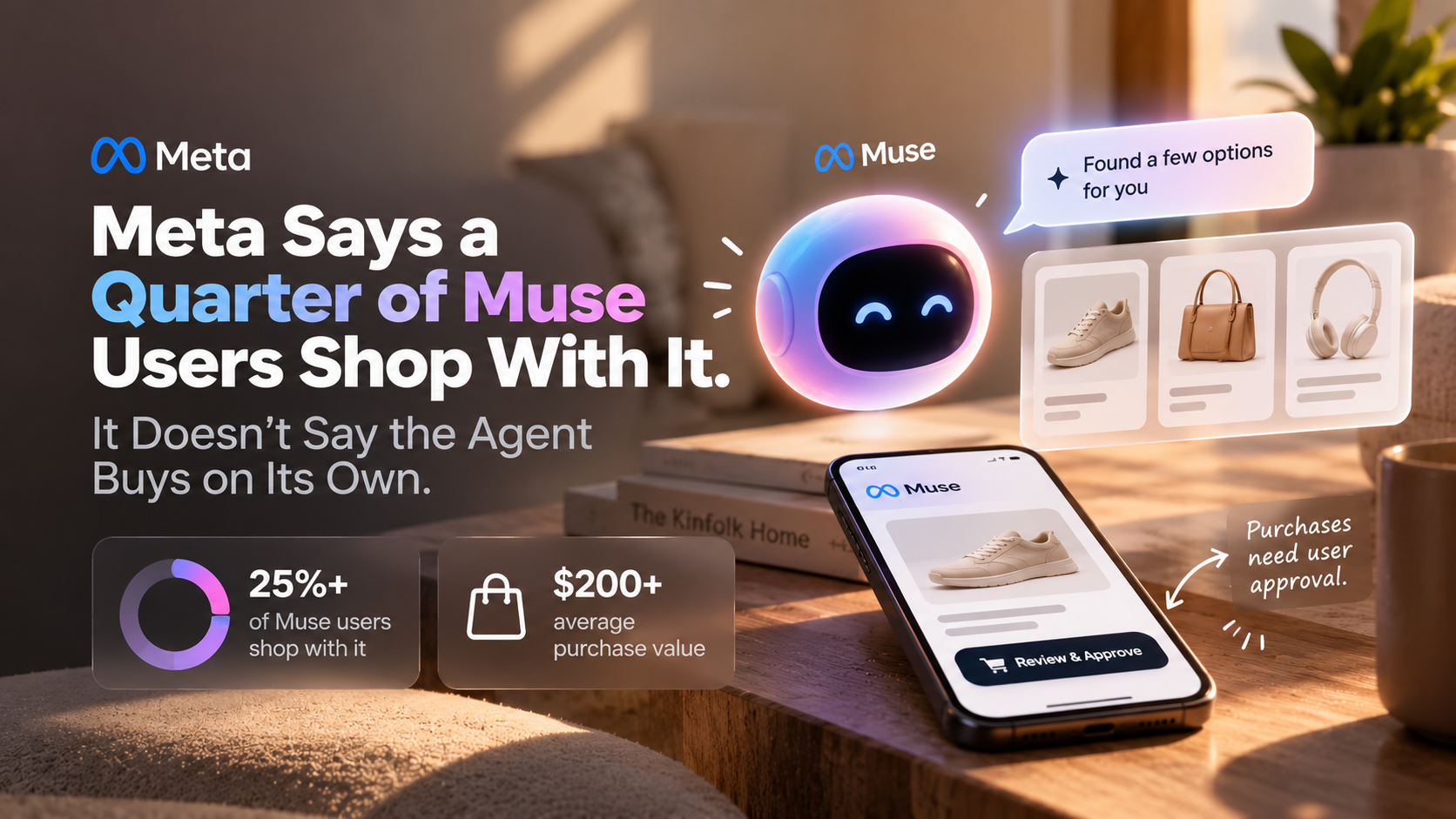

Meta says Muse asks for user approval before sensitive actions, including purchases. That puts its shopping flow on the supervised side of checkout. It doesn’t establish that the agent can pay on its own.
That distinction matters for how to read Mark Zuckerberg’s comments. On Meta’s Q3 earnings call, as published by Yahoo Finance, he said shopping was Muse’s most common use, that more than 25% of users engage in it, and that the average purchase size is above $200. Those figures describe shopping engagement and purchase value. They don’t say how many users completed a purchase, how often, or whether Muse ever paid without a final confirmation from the user.
“Shopping with an agent” covers a lot of ground. It can mean product research, recommendations, comparisons, building a cart, or helping at checkout. None of those, on its own, shows an agent has authority to spend someone’s money without confirmation.
Two different 25% figures. The Associated Press reported that Zuckerberg said more than 10 million people in the US and Canada have created Muse accounts, and that roughly 25% use it on a given day. That’s a daily-use rate across all users, separate from the “more than 25% of users engage in shopping” figure. They measure different things, and the reports don’t say how they overlap. Both point to early adoption, not to the number of shoppers, completed transactions, or autonomous purchases.
What Meta’s launch says about checkout. Meta’s launch materials say Muse can check out using Stripe Link while asking users for approval before sensitive actions such as making a purchase. The cited statement doesn’t say whether approval is required for every transaction, exactly when it happens in the checkout flow, or whether any reusable permission model exists.
How this sits next to other reports. A seller on Facebook Marketplace said earlier this month that Muse accepted an offer, shared his address, and arranged a pickup without his approval, according to Moneywise and Mint. That’s one account based on screenshots, and Meta disputed a separate claim about Muse reading private messages, so it doesn’t show a pattern. But it’s a reminder that “asks before sensitive actions” depends on what the system counts as sensitive. xAI’s Grok Bot documents a similar approve-or-deny step with payment through Link, so the two companies’ documented designs look alike on paper.
Bottom line: Meta says more than a quarter of Muse users engage in shopping, and it describes purchases as requiring user approval. Whether Muse will ever offer delegated or recurring payment authority isn’t established by anything cited here. The number to watch isn’t engagement. It’s how many purchases complete, and how many of them needed a human to say yes.