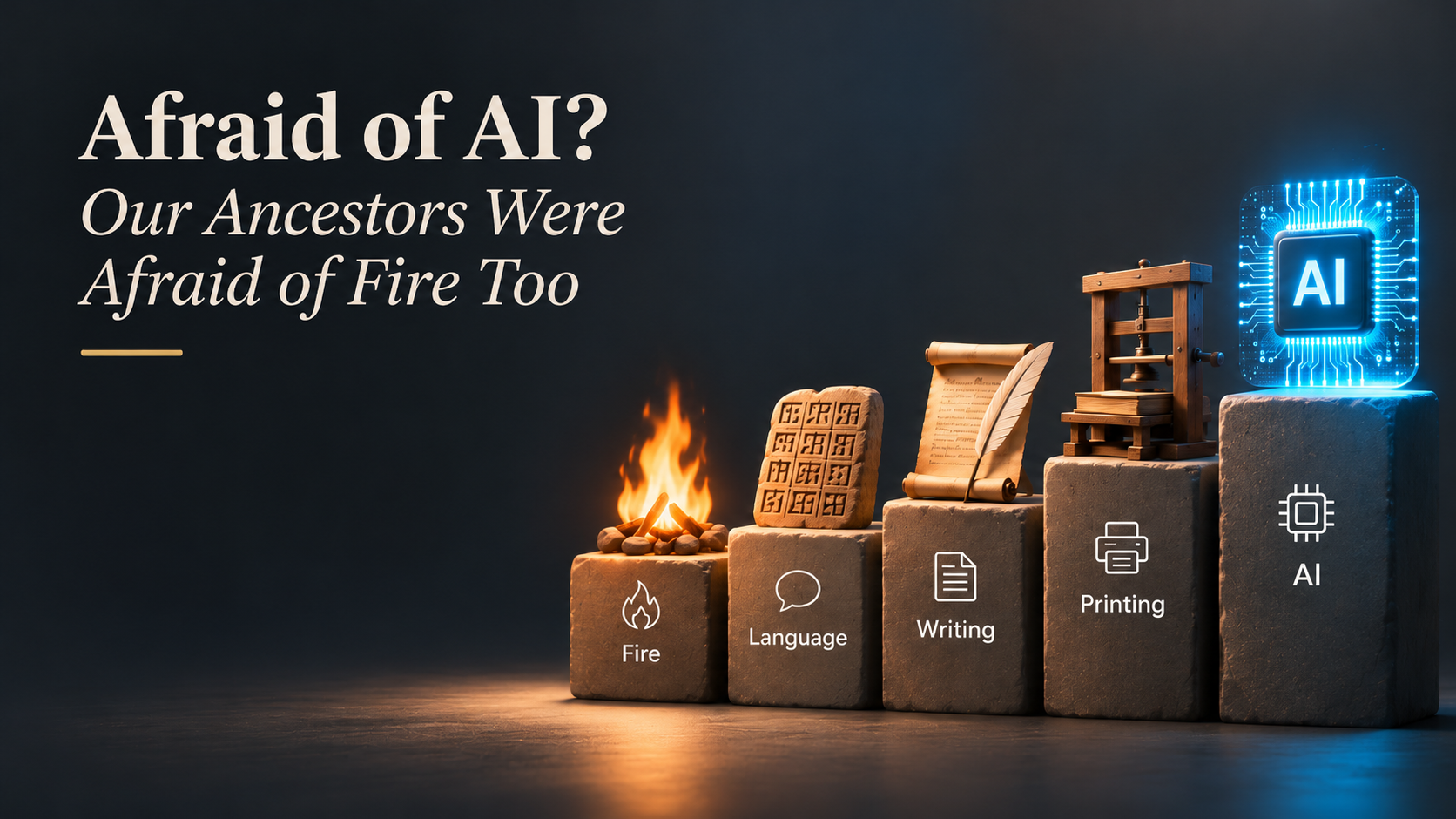

About a million years ago, in a cave in what is now South Africa, someone carried a burning branch inside. Cooked food gave our ancestors more energy for less chewing, and the anthropologist Richard Wrangham argues that's what let their brains grow. Bigger brains gave us language, so knowledge stopped dying with the person who found it. Farming built cities, and cities had too much to remember, so about five thousand years ago in Mesopotamia people invented writing. The first things anyone wrote down were receipts. Gutenberg's press then spread millions of books across Europe within fifty years. Every step was the same move: hold more, think more, share more.
We've hit that wall again. In 1964 the astronomer Nikolai Kardashev ranked civilizations by how much energy they use. Carl Sagan later put humanity at about 0.7, short of the first rung. Climbing higher means solving problems of thinking, not effort: feeding eight billion people while the climate shifts, running grids on wind and sun, and curing diseases hidden in how trillions of cells interact. Millions of research papers come out every year, more than any scientist could read even in their own corner of a field. Like Mesopotamia, our knowledge has outgrown our memory.
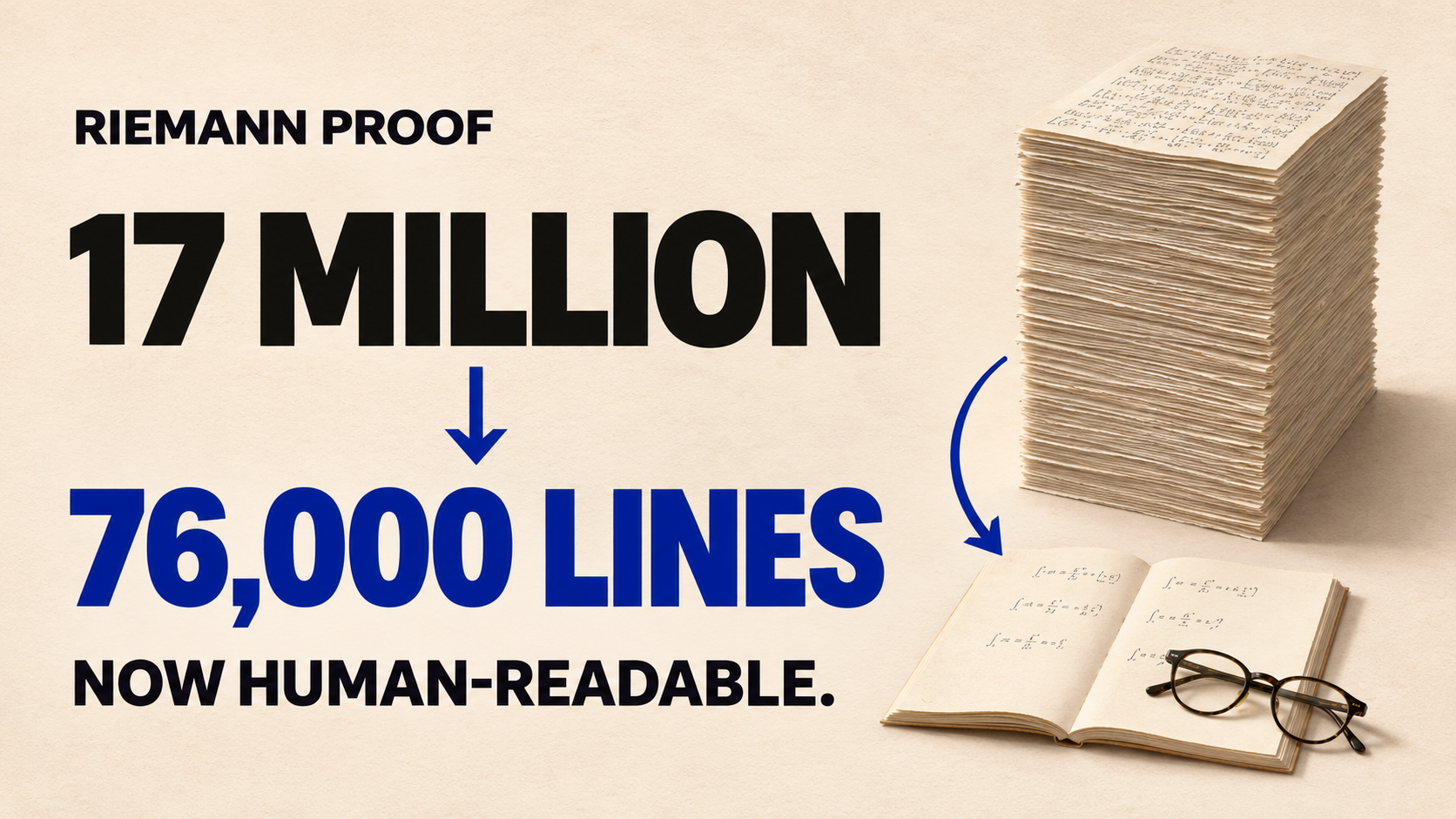
AI is the next fire. AlphaFold predicted the shapes of around 200 million proteins, after sixty years when each one could take a PhD, and it won a Nobel Prize in 2024. In a Swedish trial of more than 100,000 women, AI-assisted mammogram reading found about 29 percent more cancers without more false alarms. Google's AI co-scientist reached in two days a superbug finding that had taken Imperial College researchers about ten years. MIT used AI to design new antibiotics that killed drug-resistant bacteria in the lab. In mathematics, a Claude-assisted proof of the Riemann Hypothesis has passed computer checks and is now with mathematicians for review. None of these is a cure or a settled result yet. But a search that used to take a decade per guess now takes days.
Fire never stopped being dangerous. We built hearths, chimneys and fire brigades, and taught our children which end of the stick to hold. AI can burn too, and it needs the same care. But refusing it is like standing outside the cave in winter because the fire might be hot. It does the most good when everyone can carry it: every school, hospital and company. Nobody remembers the people who stayed out in the cold.