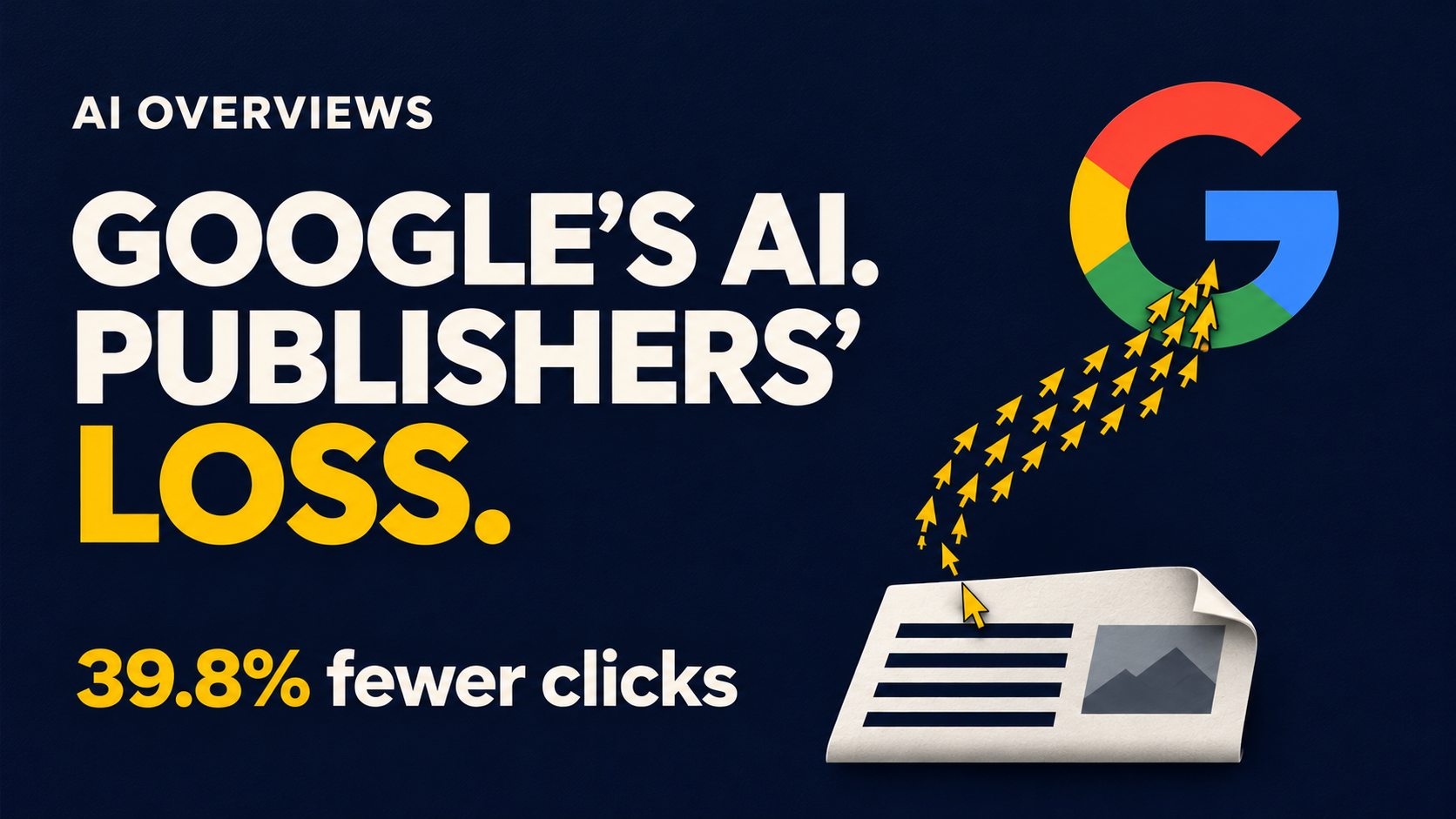

Publishers have been saying for two years that Google's AI Overviews keep users on the results page. Until now the evidence was observational. Agarwal and Sen ran a randomized field experiment, which means the overviews were shown or withheld by assignment rather than by Google's own triggering logic, and that's what lets the result be read as cause rather than correlation. When an AI Overview appeared, outbound organic clicks fell 39.8 percent and searches that ended without any click rose 34.5 percent. The Indian School of Business, describing the research, reports the same figure.
The number that matters as much as 39.8 is zero. Sponsored clicks didn't decline, and neither did how often participants searched. So the attention didn't leave Google's page. It stopped flowing to the organic links below the answer while the paid links held. That's a finding about the distribution of clicks on the page, and the draft is right to stop there: clicks aren't revenue, and the study says nothing about Google's ad income, its margins, or what it costs to generate the answers.
The limits are specific. An average experimental effect doesn't mean every query type or every site saw the same drop, and the study doesn't estimate what any particular publisher lost across Google Search as a whole. The Pew Research Center's 2025 analysis of US browsing data points the same direction with different numbers: users clicked a traditional result on 8 percent of visits when an AI summary appeared versus 15 percent without one, and links cited inside summaries got clicks on about 1 percent of visits. Those are observed visits, not a randomized comparison, so they're consistent with Agarwal and Sen but not a second measurement of the same effect.
Google's position is that AI search drives more queries and sends higher-quality visits to websites. The experiment partly tests that. It found no decline in search frequency, but no increase either, and nothing in it or in Pew's data shows whether better visits offset fewer ones for a given site. For anyone who runs a site that depends on search, that is the open question the research doesn't answer: not how many clicks vanish, but whether the ones that remain are worth enough to make up for it.