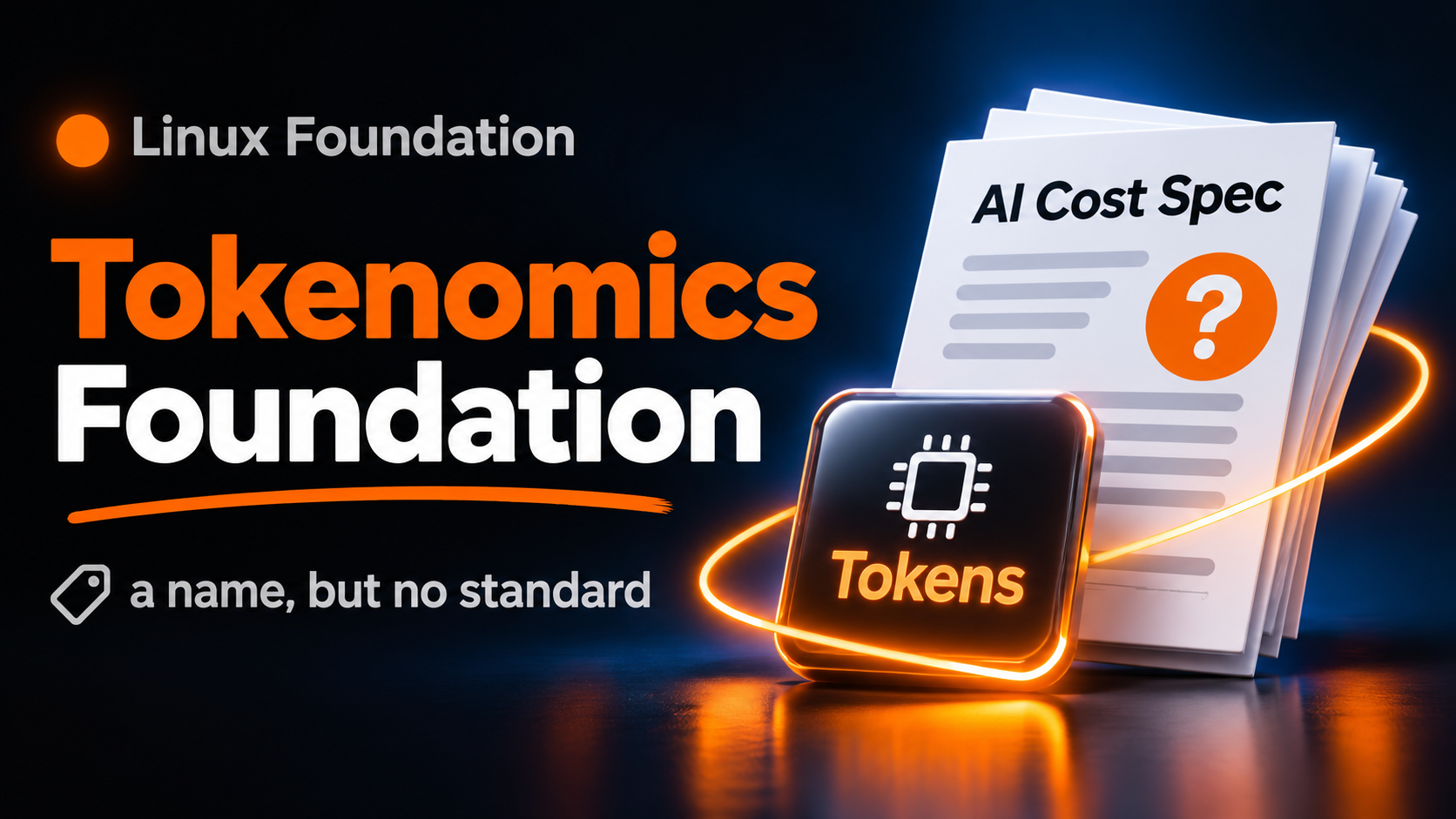

The Linux Foundation has launched the Tokenomics Foundation, an initiative to set vendor-neutral standards for AI cost, telemetry and return-on-investment measurement. It says the effort addresses a widening gap between what enterprises spend on AI and their ability to measure, manage and monetize that spend. The problem goes beyond comparing the per-token prices model providers list. In a study of eight frontier models, Stanford Digital Economy Lab researchers found that agentic coding workloads could use up to 1,000 times as many tokens as code-chat or reasoning interactions.
That makes input and output pricing an incomplete measure of what useful work costs. The Stanford researchers found token use could vary by as much as 30-fold across runs of the same task, and that using more tokens did not reliably improve accuracy. The bill can depend on how an agent plans, retries, explores alternatives and generates intermediate output. That last point is an inference from the study's run-to-run variation, not a finding the study states. TechCrunch reports that some organizations adopting agentic AI have exceeded their token budgets or used up planned spend early, and that the response is shifting toward usage controls, auditing and cost-per-outcome measurement instead of token volume alone.
The launch is an initiative, not a standard. The available Linux Foundation material doesn't identify a released specification, measurement framework, benchmark, participating vendors or adoption commitments, so it doesn't show AI costs are now comparable across models, providers or applications. ROI is the harder half. Metering tokens is possible when you have the usage data, but business return needs a definition of valuable outcomes and a way to attribute them to an AI deployment. The announcement says the foundation will address ROI measurement but gives no common formula.
If you run agents, you don't need to wait for a standard. Measure the cost, quality and completion rate of tasks together, because token totals alone are volatile and more spending doesn't reliably buy accuracy. The foundation is a credible acknowledgment of the measurement gap. Whether it produces interoperable, adopted standards isn't established by the sources so far.