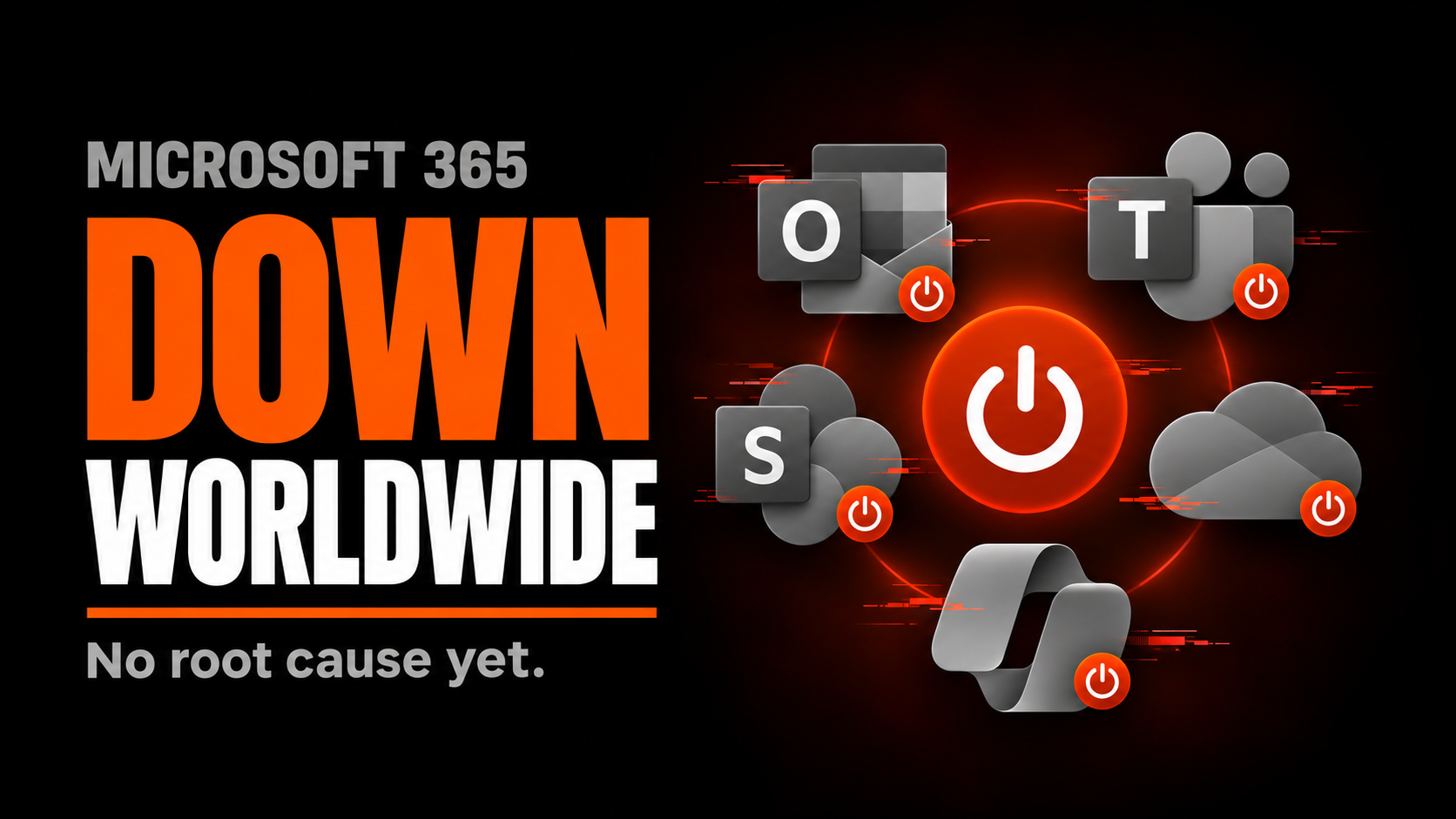

A Microsoft 365 outage disrupted email, chat and AI tools around the world on Thursday, 12 November, and was still not fully resolved the next day. Reported affected services include Exchange Online, Outlook, Teams, SharePoint Online, OneDrive, Microsoft 365 Copilot and Defender XDR. A smaller Teams incident (TM1550488) ran from about 9:45 to 10:53 AM ET that morning. The wider disruption began around 1:26 PM ET, and nearly 130,000 Outlook problem reports appeared on Downdetector shortly after 1 PM ET. Microsoft reported limited recovery around 6:57 PM ET, and later coverage described services as still unstable. Times are US Eastern and may change as Microsoft updates its incident record.
Microsoft's status updates describe a capacity failure. A process on the affected servers, reported as the one that establishes secure connections, became overwhelmed, so the servers stopped handling requests. Servers returned to service could become unresponsive again once traffic reached them, which is why recovery was slow. Microsoft said the elevated load "isn't driven by an increase in traffic, but by a number of servers being unexpectedly unavailable; straining the remaining infrastructure." Executive vice-president Charles Lamanna said the outage was not caused by a cybersecurity breach. Microsoft paused deployments, redistributed traffic, restarted servers and said it was investigating reverting recent configuration changes. That last item is an investigation step, not a confirmed cause.
The cause of the original server failures is not established. Microsoft hasn't published a root-cause analysis, and the sources so far don't say what made the servers go unavailable in the first place. Coverage also reported that OpenAI and Anthropic features connected to Microsoft 365 were affected through their Microsoft connectors. The models themselves were not reported down, and the scale of that impact isn't documented in the sources we've seen. Defender XDR and Intune were also affected, which means some of the tools teams use to respond to incidents were degraded during this one.
If you build on Microsoft 365, you don't need to wait for the post-incident report to act. Check for failed or stuck jobs that depend on Graph, Exchange or SharePoint calls between about 1 PM ET on 12 November and now, and replay what needs replaying. Put timeouts, backoff and circuit breakers on every Microsoft 365 dependency, since a hung call is worse than a failed one. And keep an incident channel that doesn't run on Teams or Outlook. The outage is a reminder that "not an attack" doesn't mean "not your problem," and the root-cause report will be the place to look for what Microsoft changes.