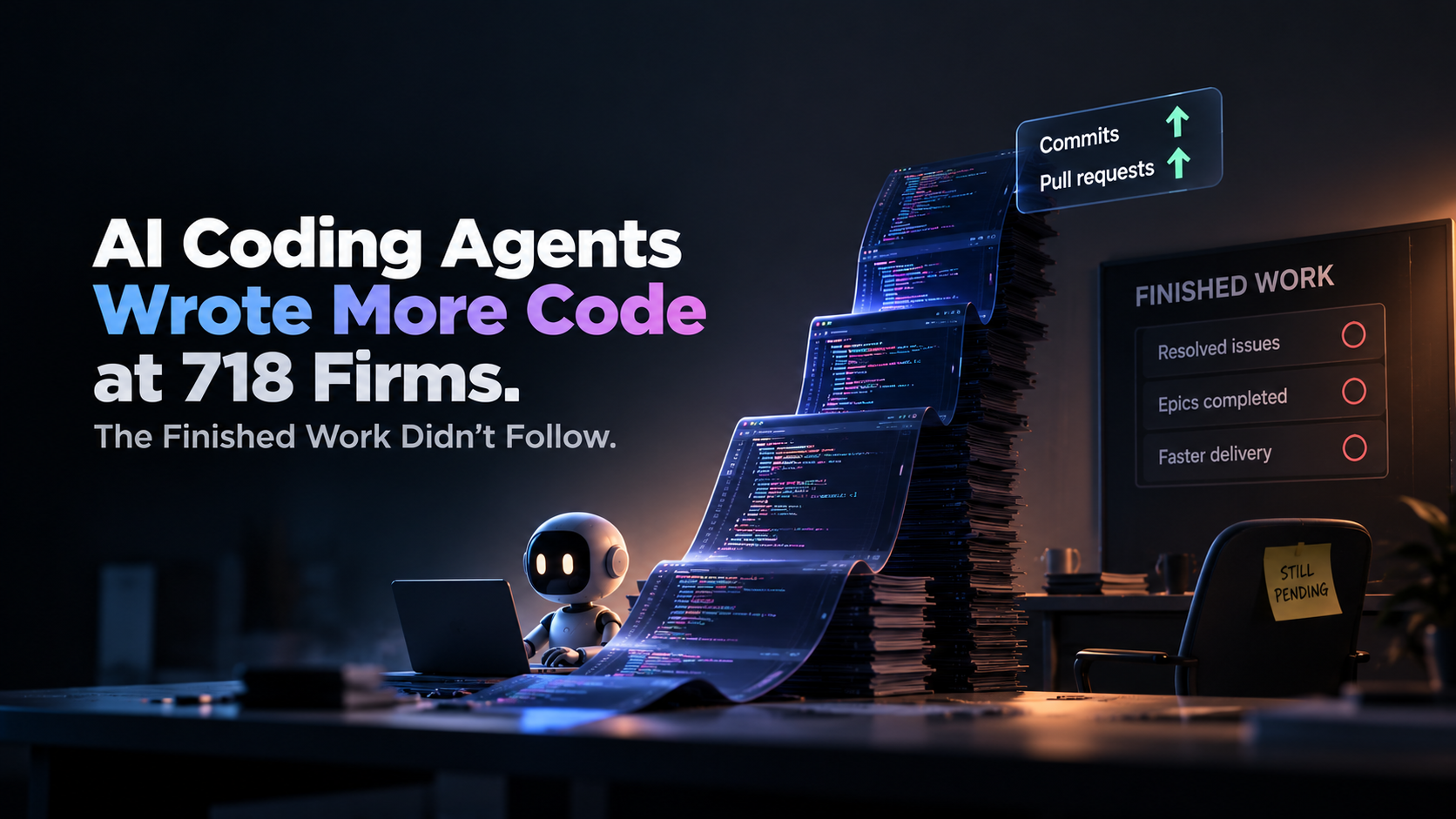
OpenAI says it has hit an internal target it's calling an "automated research intern" — coding agents now play a role in how the company runs its own experiments, according to a research publication dated September 6, 2026. The claim points to early data on agent use, experiment velocity, and task complexity.
Here's the catch: OpenAI never defines what "research intern" actually means. Does the agent formulate hypotheses? Select evaluations? Interpret results? Or does it just implement changes a human researcher already specified? The public material doesn't say — and that range covers everything from "helpful autocomplete" to "meaningfully autonomous research collaborator."
There are no numbers behind the headline either. No researcher count, no project count, no measurement period, no baseline comparison, no methodology for isolating the agent's effect from other changes in tooling or staffing. There's also no error rate, no review-time cost, and no evidence that faster experiment cycles are producing better research — only faster ones.
That distinction matters for anyone building agent-assisted workflows. Coding-heavy experimental work might genuinely be well-suited to delegation. But research quality still depends on hardware, data, evaluation design, and human judgment — none of which OpenAI has said its agents touch.
Bottom line: OpenAI has made a bold internal milestone claim and backed it with a label, not data. Until the company publishes actual definitions, methodology, and failure cases, "research intern" is a compelling internal framing — not yet an externally verifiable result.